Преводч – The Essential Bridge Between Languages and Cultures
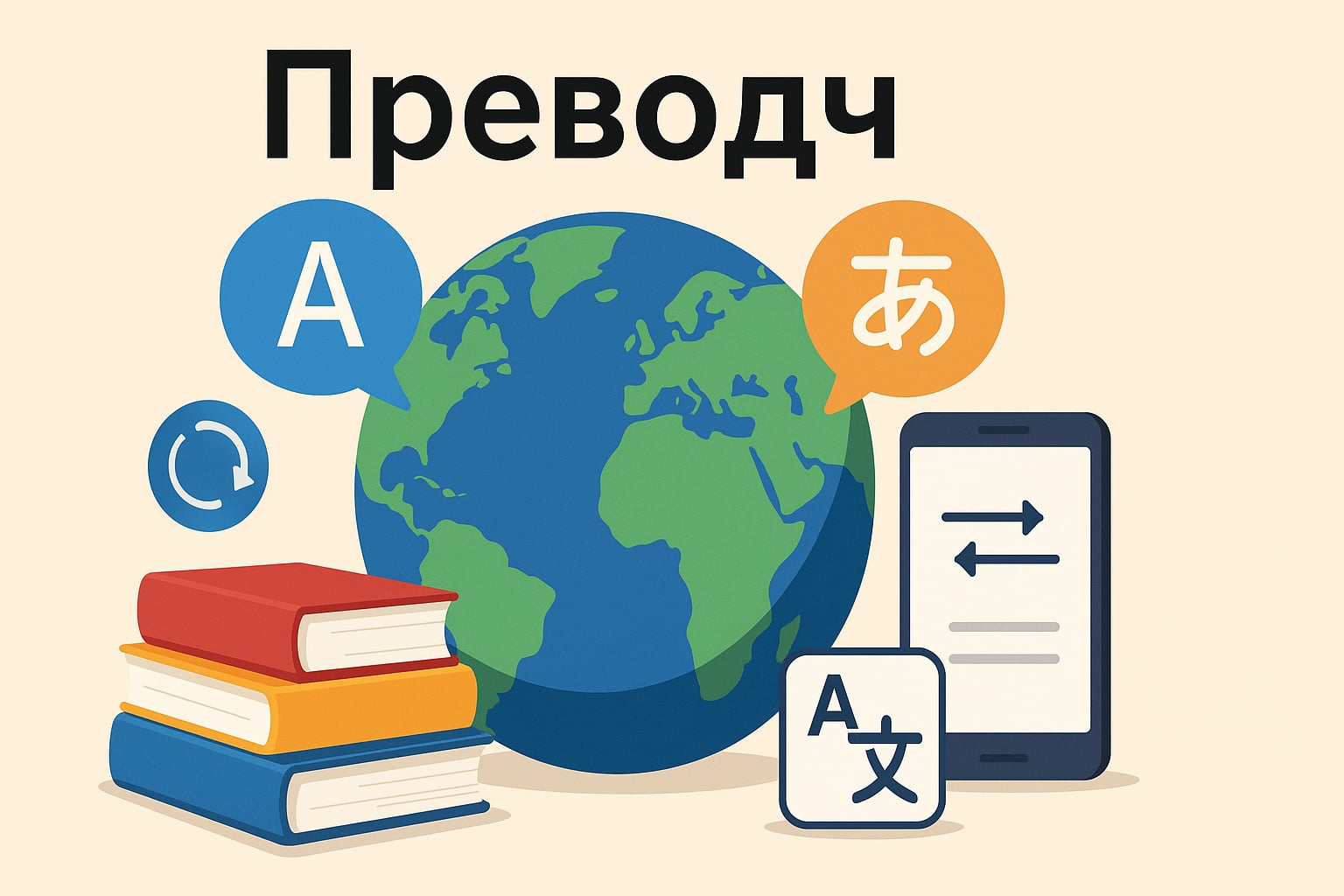
In our modern, interconnected world, the word Преводч (which means “translator” in Bulgarian) has become more than just a job title. It represents a vital role that connects societies, businesses, and individuals across linguistic boundaries. Communication is the essence of human progress, and translators — or Преводчи — ensure that people who speak different languages can understand, collaborate, and share ideas with each other.
The demand for skilled translators has expanded with globalization, international trade, and the digital revolution. Whether translating a novel, interpreting a political speech, or localizing a software interface, the Преводч plays a key part in fostering understanding. This article explores the significance of the Преводч, their methods, types, challenges, and the evolving relationship between human translation and artificial intelligence.
The Meaning and Importance of Преводч
The term Преводч comes from the Bulgarian word for “translator.” However, its significance goes beyond direct language conversion. A good Преводч not only translates words but also transfers meaning, context, and emotion. They act as cultural mediators, ensuring that the message feels authentic and natural to the target audience.
For example, in literature, a translator must understand the author’s intent, tone, and emotion to recreate the same impact in another language. In technical or legal documents, accuracy is critical because a single mistranslation can alter the meaning entirely. In short, the work of a Преводч requires both linguistic precision and cultural sensitivity.
In today’s multicultural society, translators are indispensable. They make international cooperation possible in politics, law, healthcare, education, and entertainment. Every treaty, film subtitle, software manual, or business contract that crosses linguistic borders relies on their expertise.
The Art and Skill Behind Translation
Being a Преводч is both an art and a science. On the scientific side, translators must have a deep understanding of grammar, syntax, and vocabulary. On the artistic side, they must capture tone, style, and emotion.
Translation is not a mechanical act; it’s a creative process. When a sentence in one language has no direct equivalent in another, the translator must find a way to express the same idea without losing the original meaning. This requires intuition, empathy, and creativity.
For instance, idioms and humor rarely translate literally. The expression “break a leg” in English, for example, cannot be translated word-for-word into most languages — the Преводч must replace it with a culturally equivalent phrase that conveys the same sentiment.
Types of Преводч in Modern Society
The field of translation has expanded to include many specialized roles. Each Преводч works in different contexts depending on their skills and expertise.
Literary Translators
Literary translators work on books, poetry, plays, and other creative works. They must understand not just language but also literature, culture, and history. Their mission is to recreate the voice of the author so that readers in another language can experience the same emotions.
Technical Translators
Technical Преводчи focus on subjects like engineering, medicine, or information technology. These translations must be precise and consistent because technical documents are often used by professionals who rely on the information for safety or function.
Legal Translators
Legal translators work on contracts, laws, and court documents. Accuracy is vital here; even a small mistake could cause disputes or change the meaning of an agreement.
Interpreters
Interpreters perform live translations — either simultaneously (while the speaker is talking) or consecutively (after the speaker finishes a sentence). These Преводчи must think quickly, have excellent memory, and stay calm under pressure. They are often seen at international conferences, political summits, or diplomatic meetings.
Localization Specialists
In the digital age, localization experts adapt websites, video games, and software for new markets. They don’t just translate words — they adjust visuals, currencies, measurements, and cultural references to make the product feel native to users in another region.
The Role of Technology in the World of Преводч
In the past, translation was done entirely by humans, but technology has revolutionized the process. Machine translation systems like Google Translate and DeepL use artificial intelligence to process languages at incredible speed. These tools are now capable of translating millions of words in seconds.
However, despite their convenience, machines still struggle with nuance, emotion, and cultural context. A computer might translate a sentence correctly but miss the humor, irony, or intent behind it. That’s where human translators continue to excel.
Today, many Преводчи use Computer-Assisted Translation (CAT) tools that combine the best of both worlds — machine speed and human accuracy. These tools help maintain consistency in terminology while allowing the translator to refine the final text.
Artificial intelligence is not replacing human translators; rather, it’s enhancing their capabilities. The future of translation lies in a hybrid approach, where technology handles repetitive tasks while humans focus on interpretation, tone, and meaning.
Challenges Faced by a Modern Преводч
The work of a Преводч might seem simple from the outside, but it involves numerous challenges.
- Cultural Context – Words are shaped by culture. Translating them without understanding the cultural background can lead to serious misinterpretations.
- Ambiguity – Some words have multiple meanings, and choosing the correct one requires deep comprehension of the context.
- Time Pressure – Many translators work under tight deadlines, especially in journalism, law, or live interpretation.
- Maintaining Voice and Style – A translator must preserve the author’s voice while making the text sound natural in the target language.
- Constant Learning – Languages evolve constantly. A professional Преводч must stay updated with new expressions, slang, and terminology.
These challenges require patience, experience, and lifelong learning — qualities that make expert translators so valuable.
The Ethical Responsibilities of a Преводч
Ethics play a crucial role in translation. A Преводч often deals with confidential or sensitive information, such as medical reports, legal files, or private correspondence. They must maintain complete confidentiality and objectivity.
In addition, translators must respect both the author’s intent and the target audience. They cannot distort the message for personal or political reasons. This responsibility makes their work not only linguistic but also moral.
The Future of the Преводч Profession
The future of translation is bright and full of opportunity. As globalization continues to expand, the demand for language services will only grow. The digital economy, international education, and online entertainment industries constantly require translation and localization.
New fields are also emerging. Transcreation, for example, combines translation and creativity to adapt marketing content for different audiences. This is especially popular in advertising, where cultural adaptation can determine the success of a campaign.
Moreover, multilingual artificial intelligence is developing rapidly, creating exciting partnerships between humans and machines. In the near future, Преводчи may work alongside AI tools that instantly translate speech or text — but humans will still be needed to refine and humanize the final output.
Ultimately, the essence of translation is not just about words — it’s about connection. And no matter how advanced technology becomes, empathy, creativity, and cultural understanding remain uniquely human abilities.
Conclusion
The Преводч stands as one of the most powerful figures in global communication. They bridge gaps between languages, preserve cultural identity, and enable cooperation across borders. Whether translating ancient literature, negotiating peace treaties, or making a movie accessible to the world, the translator’s contribution is invaluable.
In a world where misunderstanding can lead to conflict, the work of a Преводч promotes unity and understanding. Their skill is not just in knowing two languages — it’s in connecting two worlds. As technology advances, translators will continue to adapt, blending linguistic mastery with innovation to ensure that human voices are heard clearly, no matter the language they speak.
The future belongs to those who can communicate beyond boundaries — and the Преводч will always be at the heart of that mission.





Post Comment